Living with a Dutch Partridge Dog feels less like owning a pet and more like partnering with a thoughtful working companion, gentle, loyal, playful, and surprisingly focused when outdoor instincts awaken during daily life together.
From Drenthe fields to modern active homes, the Drent asks for exercise, attention, and calm training, rewarding patient owners with family warmth, alert judgment, and a rare bond shaped by hunting roots every single day.
History And Origin
The Dutch Partridge Dog traces its roots back to the 16th century, when pointing dogs were brought to the Netherlands via Spain and France, marking the beginning of a distinct breed with hunting instincts.
In Drenthe, the breed remained pure and adapted to practical tasks, gradually establishing itself as a key companion in the field. Official recognition in 1943 ensured the breed’s legacy, which has continued to shape its popularity and functional role.
Appearance
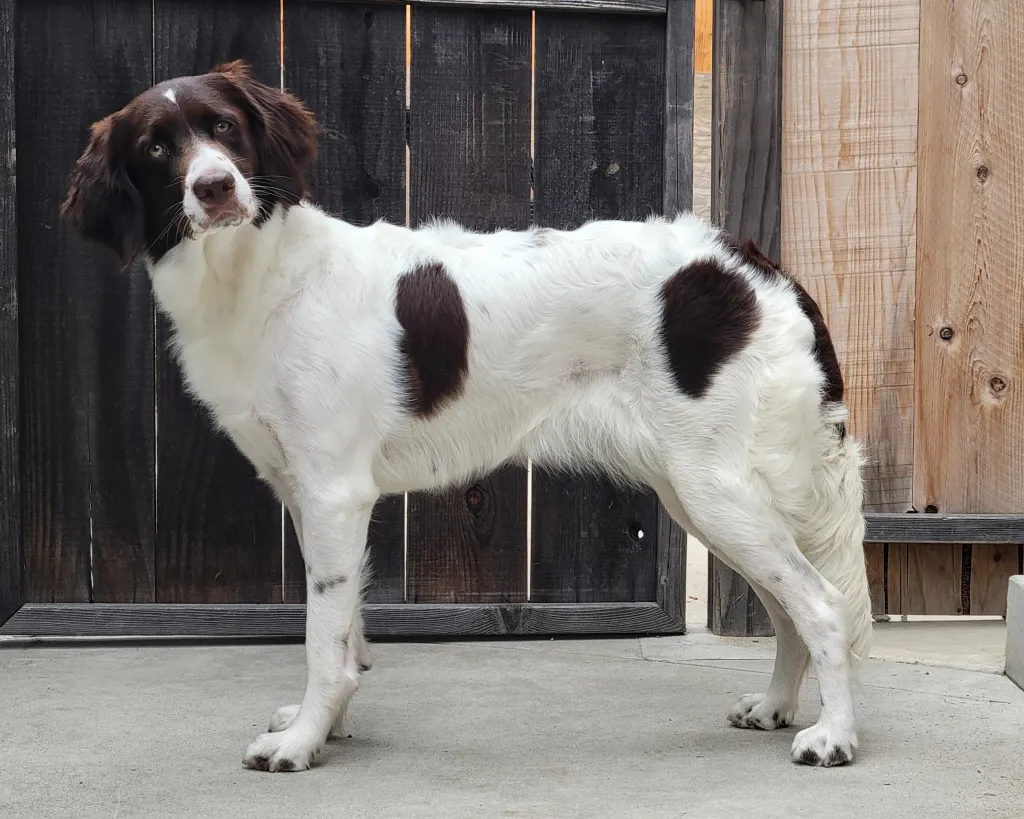
The Dutch Partridge Dog is a medium to large-medium breed, with an athletic build that emphasizes its agility. Its strong, dense coat, featuring brown markings and a white base, enhances its outdoor performance and appearance.
Feathered legs, expressive eyes, and a wavy tail contribute to the dog’s distinctive look, often catching the attention of those familiar with working breeds. This breed’s coat requires minimal grooming, though regular ear checks ensure optimal health.
Breed calculator
Dutch Partridge Dog Weight Calculator by Age
Puppy Weight Calculator
Enter your puppy's current age and weight to estimate its adult weight and see a projected growth chart.
Estimated adult weight
—
—
Projected growth curve
Milestone weight table, based on your estimate
| Age | % of adult weight | Projected weight |
|---|
Temperament
The Dutch Partridge Dog is known for its people-oriented nature. It forms a strong bond with its family, displaying a mix of gentle and playful characteristics. Early training ensures it is both social and friendly with children.
Though this breed may occasionally bark to alert its owners, it remains calm and alert. The Drent is not prone to aggression, making it a good fit for families seeking an intelligent, loyal, and obedient companion for various activities.
Exercise And Training
The Dutch Partridge Dog thrives on mental stimulation, regular walks, and running time. Engaging in agility, tracking, and scent work is crucial for its development, making it an excellent companion for active families or hunters.
Training this breed should be calm, consistent, and positive to achieve the best results. Harsh methods lead to resistance, so it is important to foster trust and patience. The Drent excels when its natural instincts are properly channeled.
Health And Grooming
The Dutch Partridge Dog is generally a healthy breed, living between 11–14 years. However, it can be prone to conditions like hip dysplasia, elbow dysplasia, and eye issues. Regular veterinary checks are recommended for early detection.
Grooming this breed is easy; the dense coat requires only weekly brushing. Regular ear checks, along with nail trimming, maintain its hygiene. With proper care, the Drent stays healthy and vibrant, thriving in active environments with minimal grooming effort.
Is The Dutch Partridge Dog A Good Family Pet?
The Dutch Partridge Dog is an excellent family pet, forming strong bonds with its family. It enjoys being around people and thrives in an environment where it gets attention, exercise, and regular training to be well-socialized.
Its gentle and playful nature makes it ideal for families with children. However, it’s not suited for owners looking for a low-energy breed. This dog requires exercise and constant companionship, making it unsuitable for people who leave dogs alone for extended hours.
Conclusion
The Dutch Partridge Dog stands out as an intelligent and loving breed, with strong instincts shaped by its hunting background. It thrives in homes that can provide the right level of exercise and attention.
Best suited for active families or hunters, the Drent requires an owner who understands its need for daily mental and physical engagement. With proper care, this breed becomes a loyal, affectionate companion capable of forming lasting bonds.