The Chesapeake Bay Retriever was bred in the early 1800s in Maryland to retrieve waterfowl. Known for its strong working dog lineage, it evolved through crossbreeding with other breeds, creating a robust and adaptable retriever breed that excelled in water-based hunting.
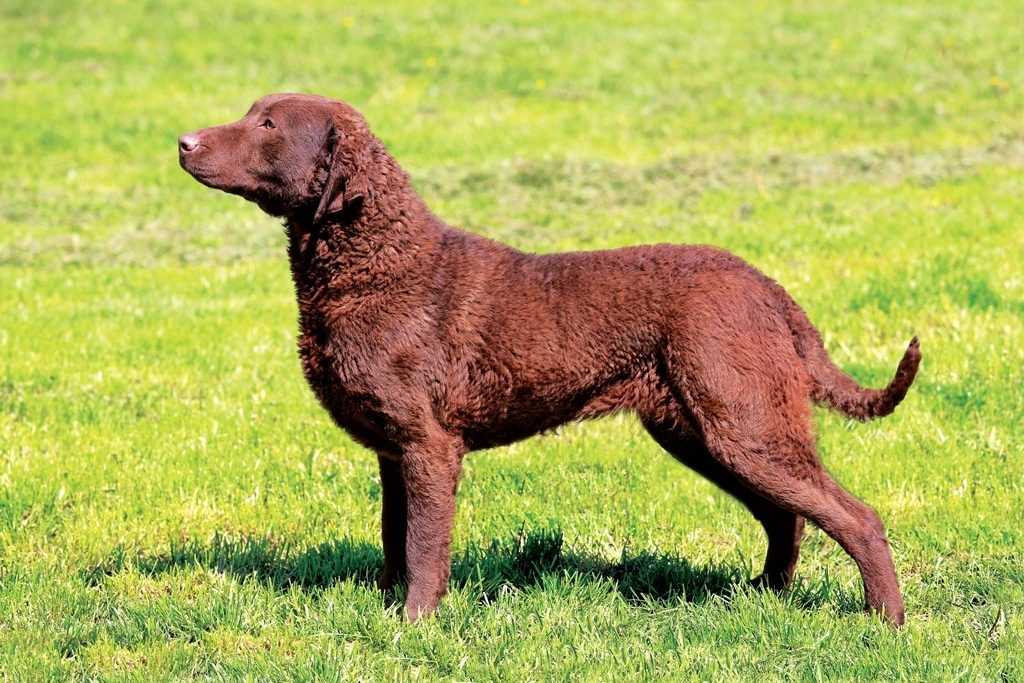
This medium-sized dog boasts an athletic build with a muscular tail and dense waterproof coat. Its amber eyes complement its strong muscular legs, and the otter tail aids in swift water movement, ideal for duck retrieval in cold conditions.
History
The Chesapeake Bay Retriever emerged in Maryland around the early 1800s from crossbreeding various breeds to create a retriever perfect for waterfowl hunting in the Chesapeake Bay. Its history traces back to a shipwreck, where the retriever breed thrived despite rough conditions.
The breed developed to handle harsh conditions like freezing ice while retrieving waterfowl in the cold waters. Its American origin stands as a testament to its strength, as it overcame difficult working dog environments and became an excellent duck retriever by the mid-1800s.
Breed calculator
Chesapeake Bay Retriever Weight Chart by Age
Puppy Weight Calculator
Enter your puppy's current age and weight to estimate its adult weight and see a projected growth chart.
Estimated adult weight
—
—
Projected growth curve
Milestone weight table, based on your estimate
| Age | % of adult weight | Projected weight |
|---|
Appearance & Physical Features
The Chesapeake Bay Retriever is a muscular, athletic breed with a dense and wavy coat, designed to withstand cold water. Its athletic build and water-resistant coat make it an excellent swimmer, well-suited for its role as a retriever.
With a broad chest, strong legs, and a tail described as an otter tail, the Chesapeake displays remarkable strength and endurance. Their amber eyes complement their powerful build, providing a unique and striking appearance.
Temperament & Personality
The Chesapeake Bay Retriever is known for its affectionate and protective nature. It tends to be reserved around strangers, yet remains a loyal companion to its family, showcasing strong marking ability and protective instincts.
This breed’s intelligent and willful disposition makes it adaptable to various environments. With proper socialization, a Chesapeake Bay Retriever can be an excellent family-friendly companion, exhibiting dominant instincts in certain situations, but also demonstrating playful and outgoing behaviors.
Training & Exercise
Chesapeake Bay Retrievers are highly energetic, requiring mental stimulation and physical exercise to thrive. Regular daily walks, water-based exercises, and field trials engage their natural instincts, ensuring they remain active and task-driven.
With their strong drive and need for consistent obedience training, this breed excels in hunting and agility sports. Positive reinforcement helps manage their dominant instincts, enabling them to perform well in water sports and other physical activities while staying playful and task-oriented.
Health & Lifespan
A Chesapeake Bay Retriever generally has a longevity of 10-13 years, requiring regular checkups and proper exercise. Common health concerns include hip dysplasia, elbow dysplasia, and cataracts, but with preventative care, they can remain a healthy dog.
Maintaining a healthy weight, along with regular routine vet checkups, is essential for the breed’s overall health. While they may develop hereditary diseases, their strong immune system helps them combat health risks, contributing to their long lifespan when properly cared for.
Behavior Notes (Detailed)
The Chesapeake Bay Retriever is known for its strong prey drive, making it an excellent hunting dog. Their independent nature means they can be assertive and dominant, but with proper socialization, they are manageable.
Their task-driven instincts make them excel in training and behavioral control, but they require positive reinforcement for behavior modification. Being task-oriented, they thrive in problem-solving activities, especially in water-based hunting instincts, making them adaptable companions.
Breed Standards
The Chesapeake Bay Retriever follows a breed standard emphasizing an athletic appearance and muscular build. With a dense coat, the breed’s shoulder height ranges from 23-26 inches, making it ideal for its role as a working dog.
Its gait reflects the strength needed for fieldwork, and the breed’s temperament is highlighted by intelligence, loyalty, and a protective nature. Retriever traits, including strong marking ability and an instinct for water-based work, are essential to its overall conformation.
FAQ – What is the Chesapeake Bay Retriever temperament?
The Chesapeake Bay Retriever exhibits a bright disposition and is known for its intelligence. This breed’s protective nature and affectionate demeanor make it a loyal and trainable companion, though it can be assertive around strangers.
With its calm demeanor and strong protective instincts, the Chesapeake Bay Retriever is a great watchdog. It is also known for being independent yet very loyal, requiring positive reinforcement for training and proper socialization to ensure a well-behaved companion.
FAQ – How much exercise does a Chessie need?
A Chesapeake Bay Retriever requires vigorous activity to stay fit. Activities like daily walks, swimming, and water sports help with stamina and endurance. As an active breed, they need consistent physical stimulation and mental stimulation.
With a natural instinct for hunting and water-based activities, the Chesapeake Bay Retriever thrives on field trials and strength training. These activities fulfill their exercise needs while keeping them healthy and fit. Regular exercise prevents common health issues.
FAQ – Are Chessies easy to train?
The Chesapeake Bay Retriever is an intelligent breed, but it can be challenging to train due to its independent and willful nature. Positive reinforcement works well, especially when used consistently to reinforce obedience training.
This breed is task-oriented and often dominant, which can make training a bit tricky. However, once trained, they become obedient dogs and adaptable companions, excelling in problem-solving tasks and responding well to behavior issues through consistent training.
FAQ – What size and weight are typical?
The Chesapeake Bay Retriever has a shoulder height of 23-26 inches for males and 21-24 inches for females. Males typically weigh between 65-80 lbs, while females weigh 55-70 lbs, with a muscular and athletic build.
This breed’s body proportions contribute to its agility and strength, making it an excellent working dog. Their athletic build is well-suited for hunting and water sports, which require substantial stamina and physical strength to excel in various tasks.
FAQ – What health issues are common?
The Chesapeake Bay Retriever is prone to certain health issues like hip dysplasia and elbow dysplasia. They may also develop cataracts or progressive retinal atrophy (PRA), both of which can affect joint health and vision.
Maintaining regular checkups and exercise can help minimize these health risks. With proper preventative care, including maintaining a healthy weight and monitoring for genetic conditions, these dogs can enjoy a healthy and active lifestyle well into their longevity.
FAQ – Is a Chessie good with kids and families?
The Chesapeake Bay Retriever is typically family-friendly and a loyal companion. This breed tends to be affectionate, often forming close bonds with children. With proper socialization, they make great pets in family-oriented environments.
Their protective nature makes them excellent guardians, while their outgoing attitude ensures they are well-suited for a family life. Despite their independent streak, Chesapeake Bay Retrievers are adaptable and do well around good with pets and children, making them a reliable choice.